
Chimney Leak Repair Richardson TX: Flashing, Crickets and Cracked Crowns
By Total Pro Roofing ·
A water stain on the ceiling beside the fireplace. A drip that only shows up when rain blows in from one direction. Dark, damp wood around the chimney when you look in the attic. Chimneys are one of the hardest spots on a roof to keep watertight, and chimney leak repair in Richardson, TX homes usually comes down to one question: is the water getting in on the roof side, or through the chimney itself? Here is how each one happens and what the fix looks like.
Why chimneys leak more than the rest of the roof
A chimney is a big box sticking up through the roof. Water running down the slope hits its uphill side and has to go around it. Every joint where shingles meet brick or siding has to be sealed with metal flashing. The InterNACHI roof inspection manual puts it plainly: chimney flashings are "large and also relatively complex, so the chimney flashings tend to be highly susceptible to moisture intrusion" (InterNACHI roof manual).
Storms around Richardson and Plano test those joints hard:
- March 4, 2025: a pre-dawn squall line brought a measured 60 mph gust at Richardson Fire Station 4 and 78 mph at Love Field. Storm reports said "much of the roof" was blown off a home north-northeast of Plano, and another home lost part of its chimney.
- June 8–9, 2025: gusts were measured at 60 mph in Richardson and 68 mph at DFW Airport.
- April 27, 2026: 1.75-inch hail was measured in Richardson, according to the Storm Prediction Center's reports for that night.
- October 1, 2026: the remnants of former Hurricane Polo dropped from just under 3 inches to nearly 6 inches of rain across the DFW area. That one day brought DFW more rain than July, August and September combined.
If a ceiling stain near your fireplace showed up after that October rain, the chimney is a good place to start looking.
Roof-side causes: flashing and the cricket
This is where a roofer looks first: the joints where the shingles meet the chimney.
Step flashing and counter-flashing
Along the sides of a chimney, small L-shaped pieces of step flashing are woven in with each course of shingles. Over the top of them goes counter-flashing. In InterNACHI's words, "Counter flashing is installed into the mortar joints and is then folded downward to cover the step or base flashing." Across the low side of the chimney, an apron flashing covers the lowest face.
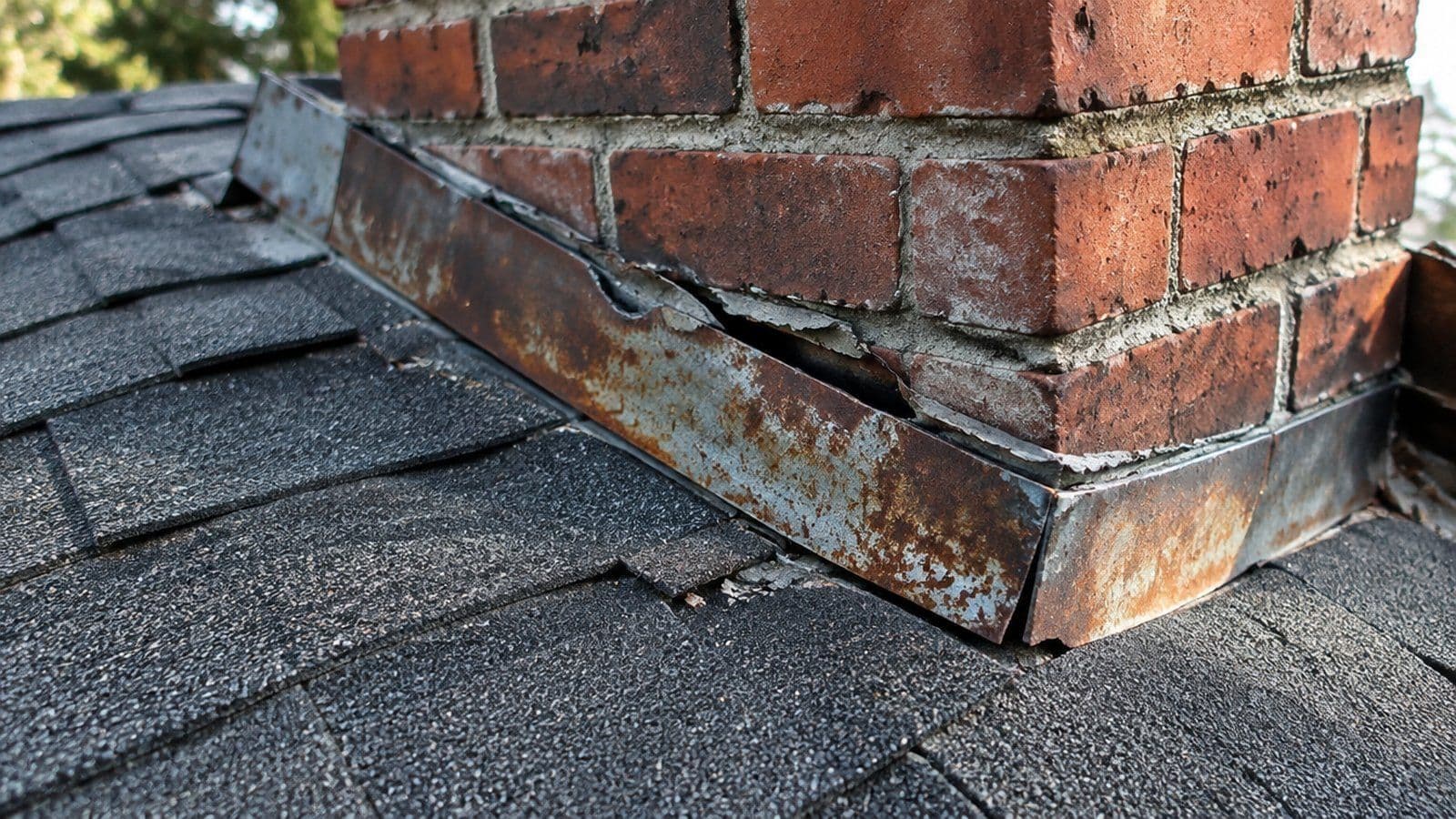
Trouble starts when that metal rusts, works loose or was never set into the mortar to begin with. Sometimes counter-flashing is simply glued to the brick with sealant, and once that sealant dries out and cracks, the gap is right where rain runs. InterNACHI tells inspectors that when counter-flashing is attached with sealant only, they should "look for signs of moisture intrusion, such as stains or decay in the roof sheathing."
The cricket on the uphill side
A cricket, also called a saddle, is a small peaked section built on the uphill side of a chimney so water splits and runs around it instead of pooling against the brick. The International Residential Code requires one: "A cricket or saddle shall be installed on the ridge side of any chimney or penetration more than 30 inches (762 mm) wide as measured perpendicular to the slope" (IRC R903.2.2, 2021 edition). It has to be covered with sheet metal or the same material as the roof. Each city adopts its own edition of the code, so check with your local building department for the rule where you live.
The size matters, too. InterNACHI's cricket table scales the height to the chimney's width and the roof's pitch. On a 6:12 roof, a 42-inch-wide chimney needs a cricket about 10½ inches high.
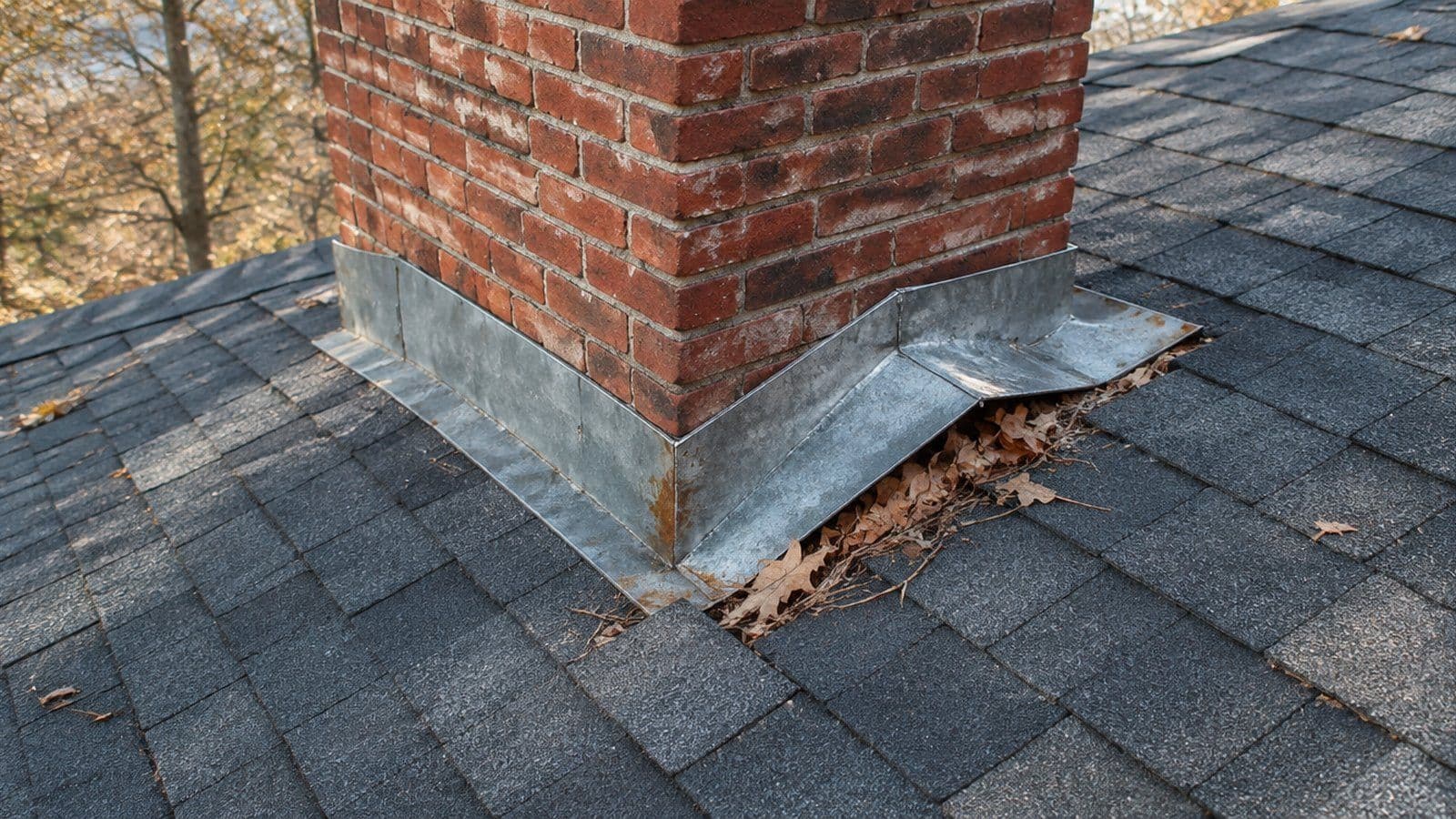
Even a good cricket needs to stay clear. Debris that collects in its valleys holds moisture against the flashing and speeds up corrosion.
Masonry-side causes: crowns, mortar and chase covers
Sometimes the flashing is fine and the water is coming through the chimney itself.
- A cracked crown. The crown is the cap of concrete or mortar across the top of a masonry chimney. Once it cracks, rain can soak down into the chimney and show up inside, around the fireplace, even though nothing is wrong with the roof.
- Worn mortar joints. Mortar that is crumbling or missing lets water into the brick. It can travel down inside the chimney and come out below the flashing, where it looks exactly like a roof leak.
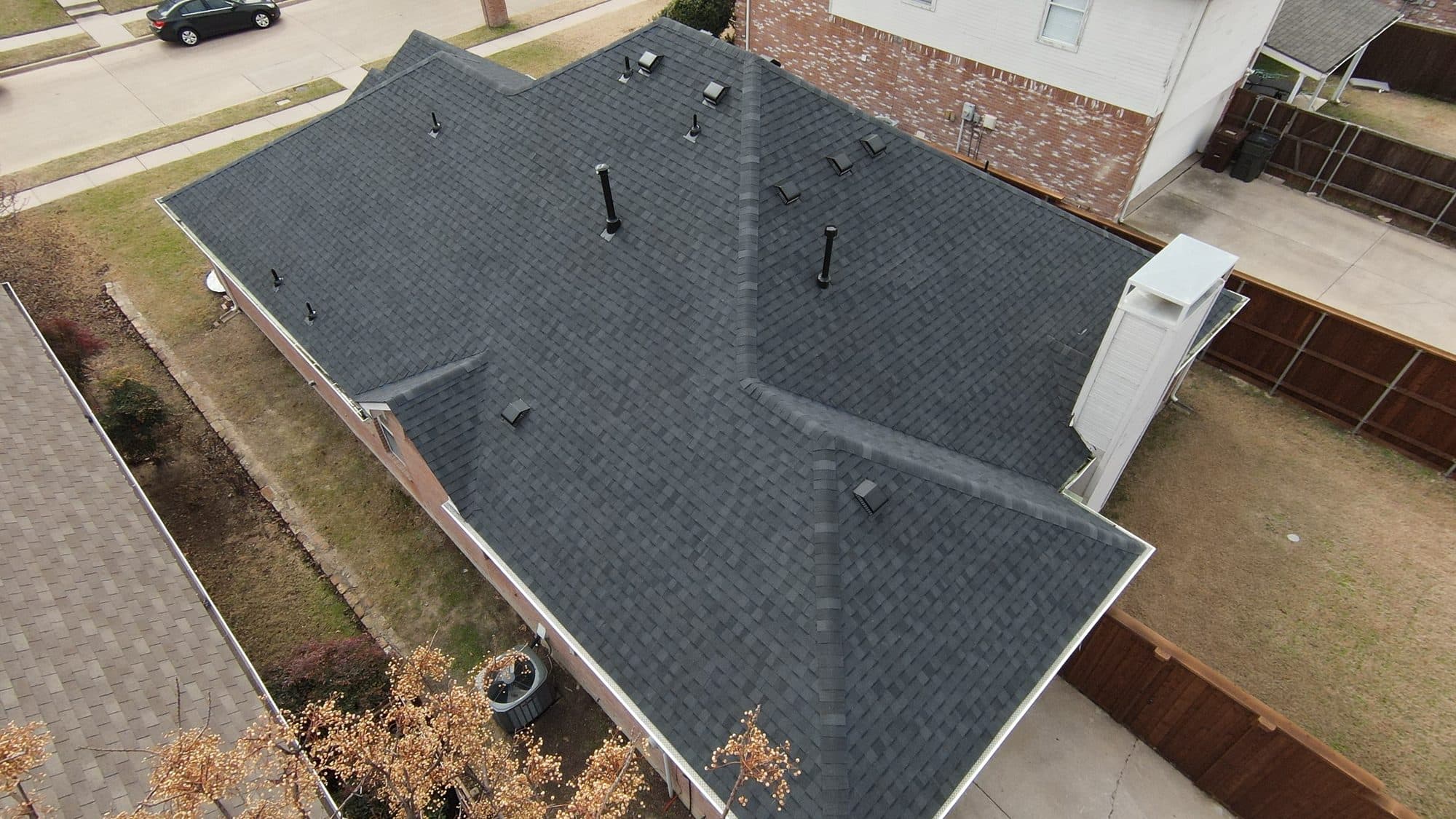
- A rusted chase cover. Some homes have a framed chimney covered in siding, like the one at the top of this post. Its metal cap can rust or open up at the seams.
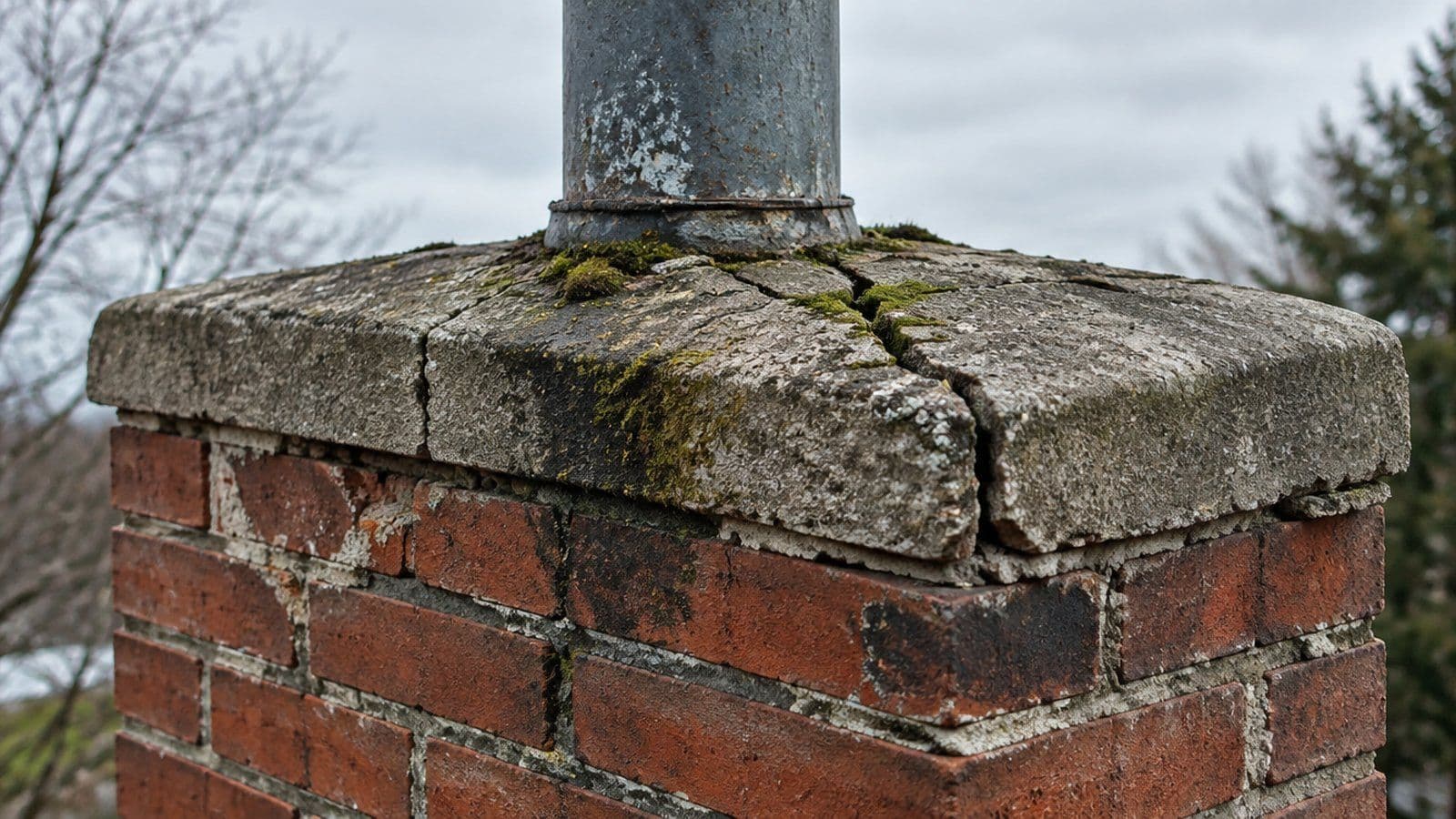
New flashing will not fix any of these, which is why good chimney leak repair in Richardson, TX starts with a diagnosis, not a tube of sealant.
How to tell where the water is getting in
You can narrow it down from the ground and the attic. Please stay off the roof.
- Notice when it leaks. A leak that only shows up in wind-driven rain from one direction often points to the flashing on that side of the chimney.
- Look in the attic on a dry day after a rain. Use a flashlight. Stains or soft, dark wood on the roof decking right around the chimney usually mean a flashing or cricket problem.
- Check the fireplace. Dampness inside the firebox or stains on the brick inside the house point toward the crown, the cap or the masonry.
- Look at the uphill side from the yard. If you can see leaves or debris piled behind the chimney, the cricket is missing, too small or clogged.
Our post on why roofs leak covers other common leak sources.
Chimney leak repair in Richardson, TX: what the fix looks like
Once the source is clear, the repair usually falls into one of these:
- Refasten and reseal. If one section of flashing has worked loose but the metal is sound, it can sometimes be secured and resealed.
- New step and counter-flashing. The shingles around the chimney come up, new step flashing goes in with them, and new counter-flashing is set into the mortar joints instead of being glued to the face of the brick.
- Add or rebuild the cricket. On a wide chimney with no cricket, building one stops the water from pooling at the source.
- Pair it with a re-roof. If the roof is near the end of its life, the best time to redo chimney flashing is while the old shingles are off. InterNACHI puts 3-tab shingles at about 20 years and architectural shingles at about 30, and notes that hot climates drastically reduce asphalt shingle life.
What is not a fix: a fresh bead of caulk or roofing cement smeared over the gap. The Asphalt Roofing Manufacturers Association says roofing cement patches "should not be considered a suitable long-term repair." Our post on roof repair in Forney explains more about how flashing fails, and our roof repair page covers the rest.
If a storm caused the damage, take dated photos and talk to your insurance agent. TDI advises filing as soon as you can after hail or wind damage, and deadlines vary by policy. The storm damage page explains how Duane helps with the insurance side.
Get your chimney leak checked by Duane
If you need chimney leak repair in Richardson, TX, or in Plano or Garland, call Duane Huddleston at (214) 545-8133 or request a free inspection. He will check the flashing, the cricket and the shingles around your chimney, look at the attic, and show you photos of what he finds. Then he will tell you straight whether the leak is on the roof side or in the masonry. The inspection is free, with no obligation.
Total Pro Roofing is based in the Rockwall and Royse City area and works across the DFW Metroplex, including Rowlett and the rest of our service areas.
Have a question about your roof?
Call Duane at (214) 545-8133 or request a free inspection. No cost, no obligation.