
Ice Storm Roof Damage in Dallas: Freezing Rain, Sleet and Falling Limbs
By Total Pro Roofing ·
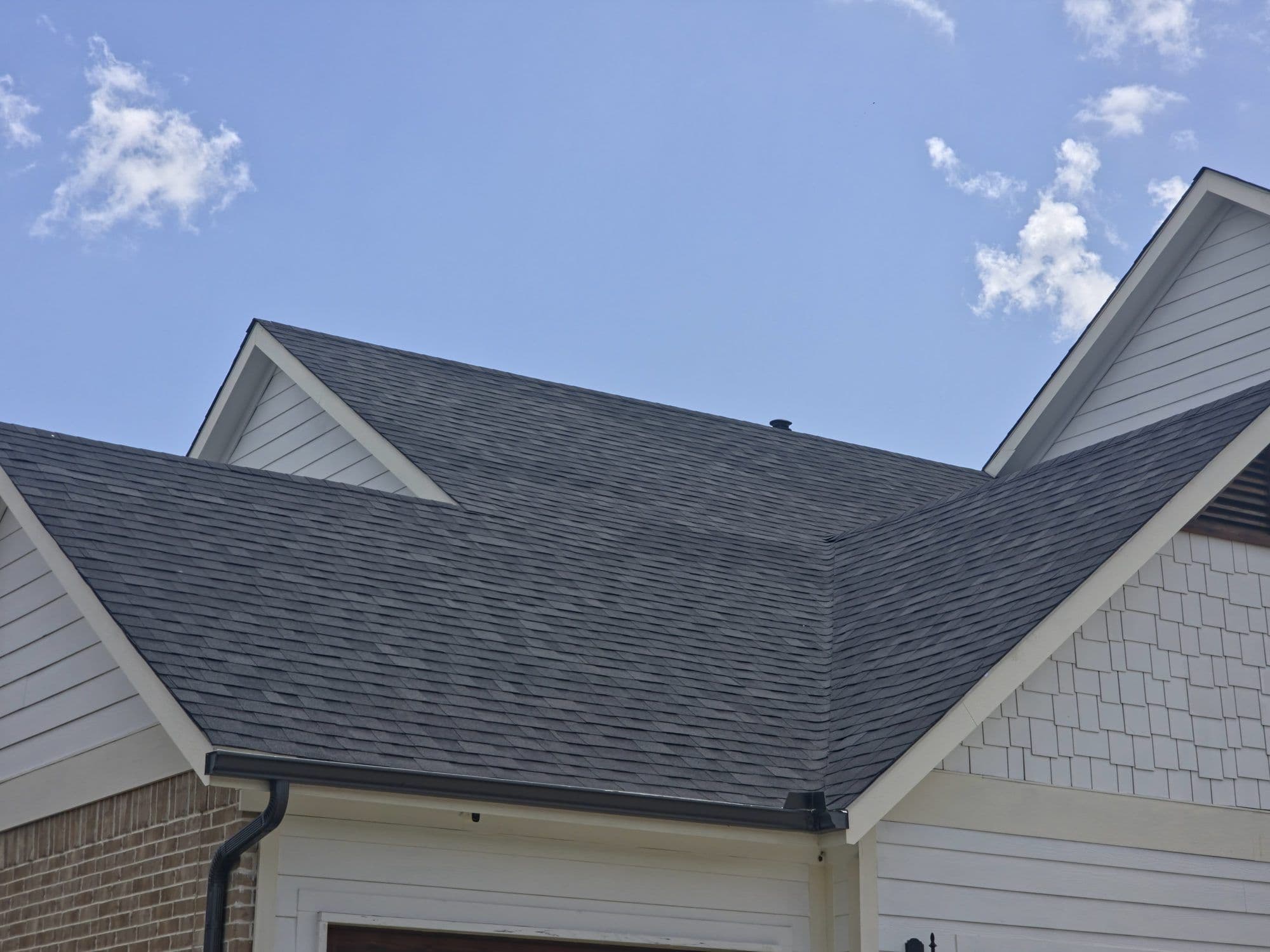
Ice storm roof damage in Dallas rarely looks like the snow-country pictures. Here it comes from glaze ice, sleet, overloaded gutters and falling tree limbs, plus leaks that show up days after the thaw.
Last January was a reminder. From January 23 to 26, 2026, the Metroplex got mostly sleet and freezing rain before it turned to snow late on the 25th. DFW Airport stayed at or below freezing for 58 straight hours, and the high on January 25 was just 21°F, a record-low high for the date (NWS Fort Worth). The Winter Storm Warning covered the area, including Rockwall County. Here is what ice does to a roof, what to do while it is on, and what to check once it melts.
Freezing rain vs. sleet: what is landing on your roof
The forecast words matter, because they tell you what kind of trouble to expect. The National Weather Service defines them this way:
- Freezing rain is "Rain that falls as a liquid but freezes into glaze upon contact with the ground." It coats everything it touches, including shingles, gutters, power lines and tree limbs.
- Sleet is "pellets of ice composed of frozen or mostly frozen raindrops or refrozen partially melted snowflakes." It bounces and piles up like gravel.
- An ice storm is when "Significant accumulations of ice pull down trees and utility lines." NWS notes that significant ice usually means accumulations of a quarter inch or more (NWS glossary).
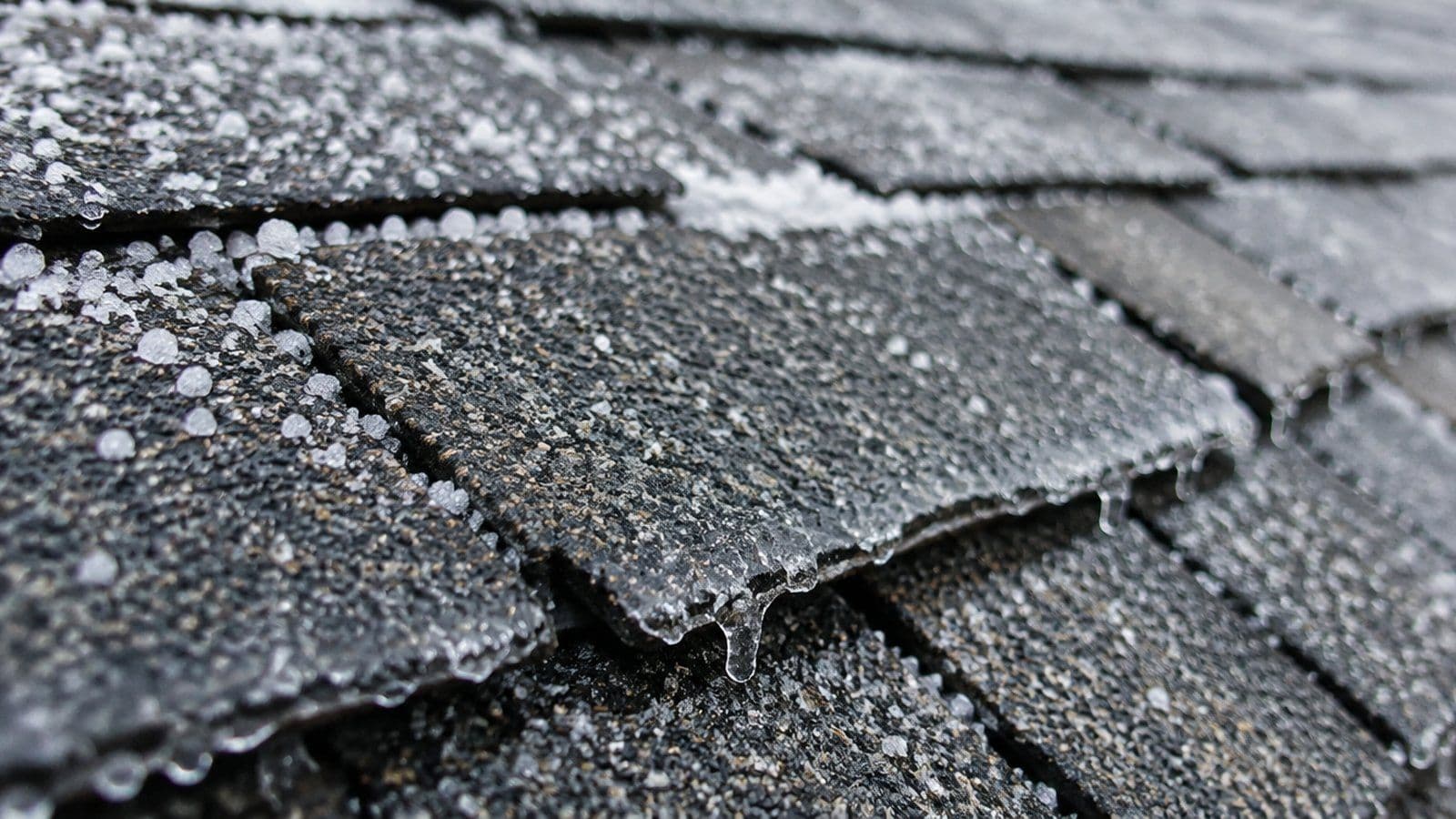
North Texas has seen worse than last January. The NWS Fort Worth list of significant snow and ice events includes December 25–27, 2000, with "Up to four inches of ice" from Montague to Lamar County, and December 5–6, 2013, when sleet and freezing rain piled up as much as 4 to 5 inches in the Sherman and Denison area. That second one is where the term "cobblestone ice" came from. Snow happens too: on January 9–10, 2025, NWS totals showed 3.5 inches in Frisco, 3 in Allen, 2.6 at DFW Airport and 1.8 in Fort Worth.
What ice does to a North Texas roof
Ice-loaded limbs
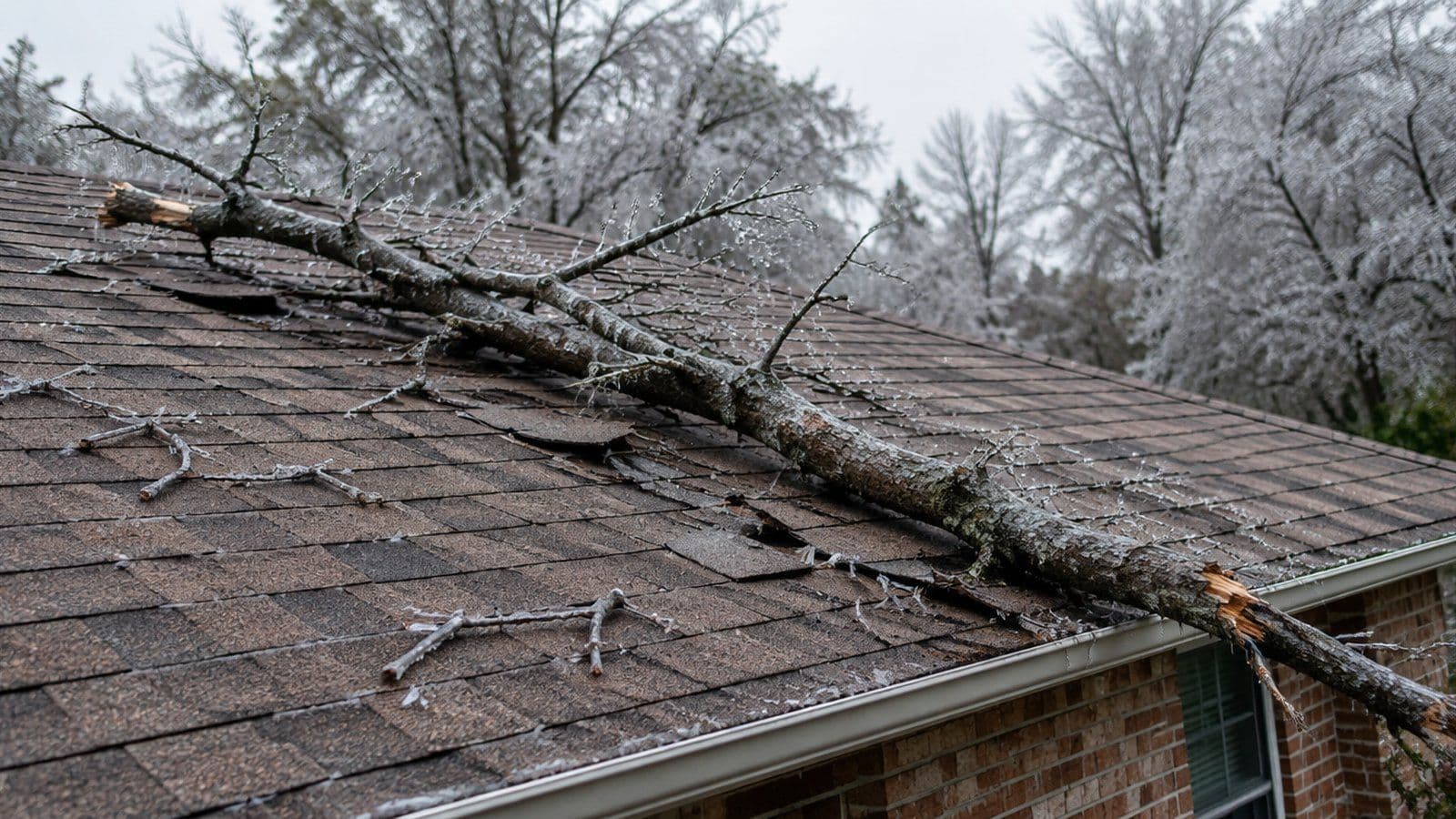
The NWS definition of an ice storm says it all: the weight of the ice pulls down trees and power lines. A limb that hangs over your roof on a normal day can snap under a coat of ice and land on the shingles, or go right through them. That is why the limbs over your roof are the first thing to look at, before and after an ice storm.
Gutters full of ice
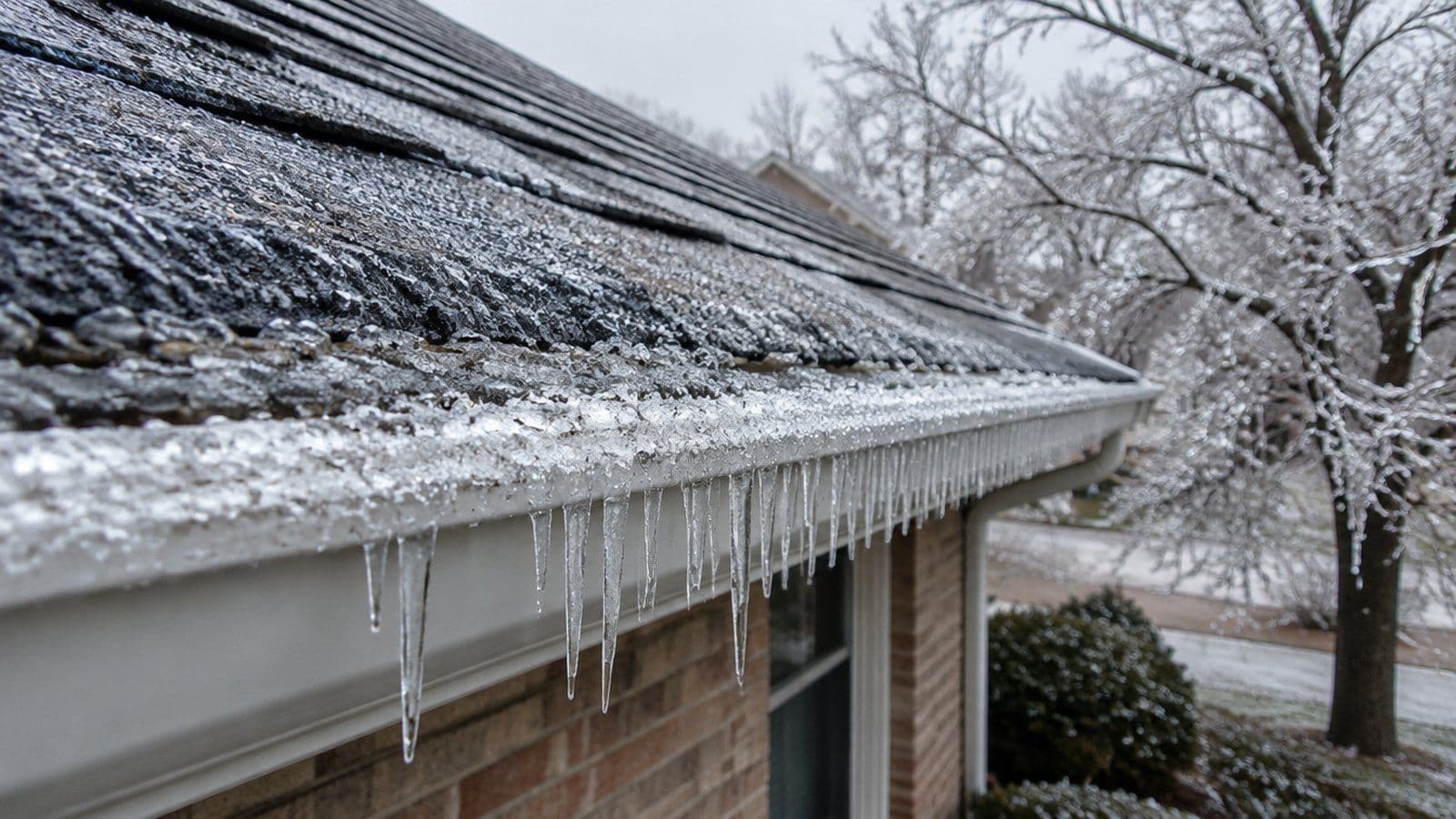
A gutter packed with leaves holds water, and that water freezes solid. Add sleet and glaze on top and the gutter is carrying a lot of extra weight. Gutters can sag, pull away from the fascia or come down with the downspouts. Melt water that cannot get through spills over the edge and into the fascia board instead.
Ice dams are rare here, but not impossible
InterNACHI describes an ice dam as "a ridge of ice that forms at the edge of a roof and prevents melting snow from draining," and says the main cause is heat escaping from the house and melting the snow from underneath. The NWS office in Grand Rapids notes that ice dams "are most common in northern climates." In DFW they are uncommon, and freezing rain and sleet are the usual threat. When sleet sits on a roof for two or three days, though, melt water at a cold eave can still back up under the shingles. InterNACHI warns that leaks like that can lead to "rotted roof decking."
Small openings get bigger
A cracked shingle, a gap at the flashing or a split pipe boot might shrug off a summer shower. Water that gets in and freezes expands and opens the gap a little wider. Those leaks often do not show up as a ceiling stain until days after the thaw.
During the storm: leave the ice alone
The best thing you can do for your roof while it is iced over is mostly nothing.
- Do not chip, scrape or shovel ice off the roof or gutters. InterNACHI specifically warns against using "shovels, hammers, ice picks, rakes," because "The roof can be easily damaged."
- Stay off the roof and off ladders. Ice makes both dangerous, and CertainTeed notes that "Cold shingles are more prone to cracking."
- Keep downspout outlets clear at ground level so melt water drains away from the foundation.
- If water comes in, catch it in buckets, move what you can out of the way and take dated photos.
- If a limb comes through the roof, keep everyone out of that room and away from any downed power lines. Our post on an emergency roof tarp covers what to do in the first 24 hours.
After the thaw: checking for ice storm roof damage in Dallas
Once the ice is gone and the roof is dry, walk around the house and look from the ground:
- Limbs and branches on the roof or leaning against it
- Shingles or pieces of shingle in the yard, and any dark patches where shingles are missing
- Gutters that sag, pull away from the house or have come loose at the seams
- Downspouts that are bent, crushed or disconnected
- Fascia boards with stains or soft spots behind the gutters
- Ceilings and the attic over the next week, especially near exterior walls, since winter leaks often show up late
If you see any of that, have a roofer check it before the next round of rain. Most of it is a straightforward roof repair or gutter repair. Our winter roof prep checklist covers what to do before the next freeze, including trimming the limbs over your roof.
Insurance and repairs after an ice storm
If you have ice storm roof damage in Dallas or the suburbs, whether from ice or a falling limb, take dated photos of everything, inside and out, and call your insurance agent. Coverage and filing deadlines vary by policy, so do not wait to ask. After hail or wind damage, the Texas Department of Insurance notes that your policy may pay for temporary repairs, so ask your agent whether that applies to your ice damage, and keep every receipt. Keep in mind that, as TDI puts it, "Your insurance company won't pay for a new roof just because it's old or worn out." The damage has to come from the storm.
Be careful who you hire after a big winter storm. TDI says that after a disaster, it is against the law for out-of-town contractors to ask for a down payment before they start, and Texas law makes it illegal for a roofer to waive or cover your deductible. None of this is legal or insurance advice. Your policy and your agent have the final word. The storm damage page explains how Duane helps homeowners document damage and meet the adjuster.
Have Duane check your roof after the ice
If you think you have ice storm roof damage in Dallas, or anywhere in Rockwall County and the rest of DFW, call Duane Huddleston at (214) 545-8133 or request a free inspection. He will check the shingles, flashing, gutters and attic, show you photos of what he finds, and tell you straight whether it needs a repair or nothing at all. The inspection is free, with no obligation.
Total Pro Roofing is based in the Rockwall and Royse City area and works on homes and commercial buildings across our service areas.
Have a question about your roof?
Call Duane at (214) 545-8133 or request a free inspection. No cost, no obligation.