
Wind Damage Roof Repair in Rowlett, TX: Creased, Lifted, Torn and Missing Shingles
By Total Pro Roofing ·
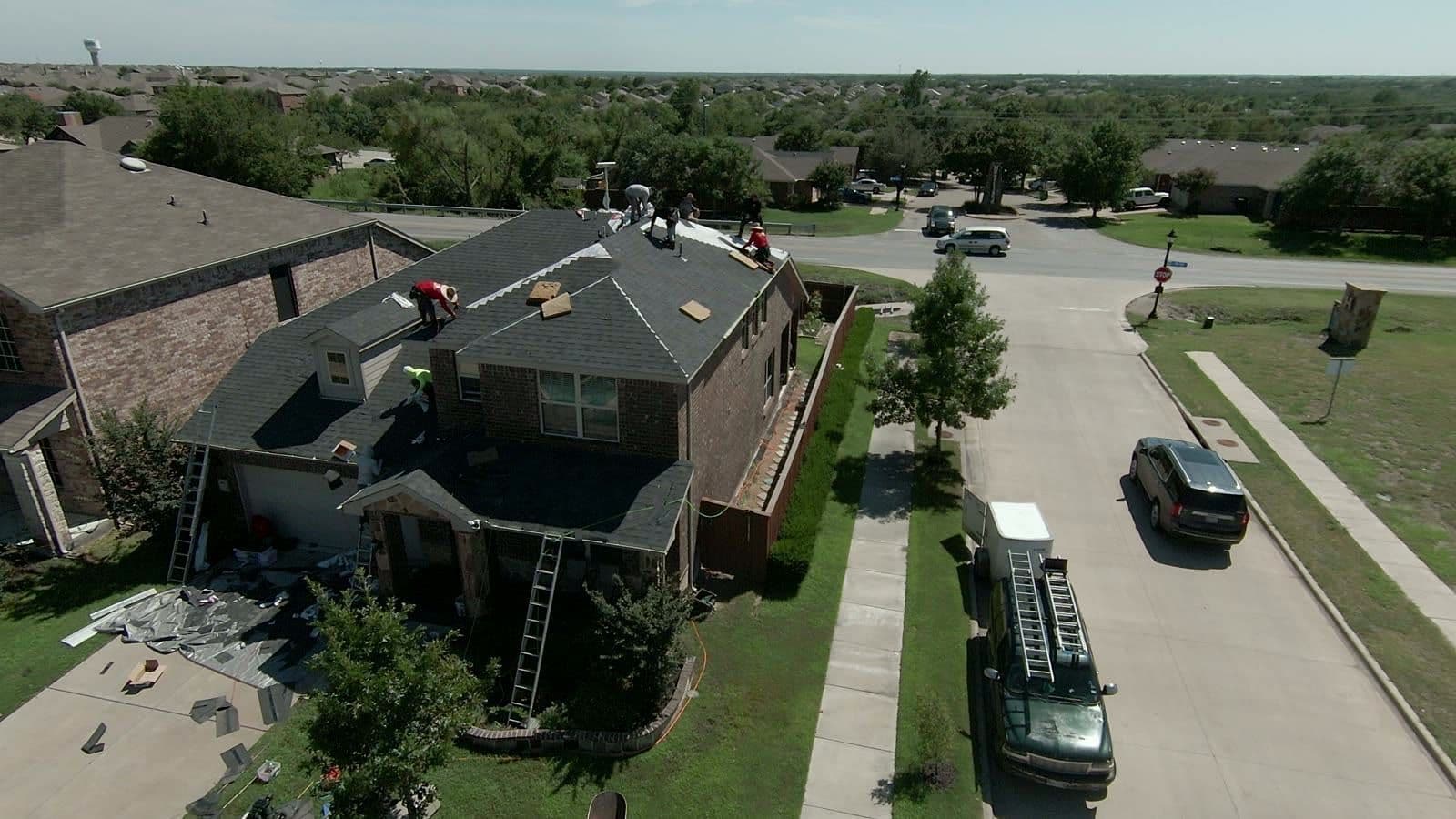
You hear it in the middle of the night: a gust slams the house, something flaps on the roof, and in the morning there are a few pieces of shingle in the yard. If you are looking into wind damage roof repair in Rowlett, TX, that flapping sound is the place to start. Wind does not have to tear a roof off to cause a leak. Most of the time it does quieter damage. It lifts a shingle, breaks the seal underneath it, and leaves a crease you cannot see from the driveway.
Rowlett, Sachse and Garland have had plenty of wind to test their roofs. Here is what wind actually does to shingles, how to check yours from the ground, and when a repair is enough.
Recent wind storms around Rowlett, Sachse and Garland
Two storms in the last couple of years stand out for this side of the Metroplex.
- June 8–9, 2025. Straight-line winds hit DFW on a Sunday night. NOAA's Storm Prediction Center reports list a measured 60 mph gust at Lakeside Park in Rowlett and another 60 mph gust in Richardson, with 68 mph at DFW Airport. FOX 4 reported gusts up to 80 mph in places. About 38,000 Oncor customers were without power at 7:30 the next morning.
- May 28, 2024. An early-morning, derecho-type windstorm swept across Dallas, Richardson, Sachse, Garland, Rockwall and much of the rest of DFW. Gusts were measured at 73 mph in Sachse and 75 mph at Love Field. Oncor reported 627,154 customers without power at 8 a.m.
Hail has been part of the picture too. On April 27, 2026, storm spotters reported 2-inch hail in Rowlett. If that storm is your bigger worry, read our guide to hail damage roof inspections.
Keep in mind that those wind numbers come from specific weather stations and spotters, not from every street in town. Your roof may have seen more wind than that, or less. The only way to know is to look.
What wind does to shingles
Before you call anyone about wind damage roof repair in Rowlett, TX, it helps to know what you are looking for. Asphalt shingles are held down two ways: nails, and a strip of sealant that bonds each shingle to the one below it once the sun warms it up. Wind works its way under the bottom edge, pulls up on the shingle, and tries to peel it back. What happens next depends on how hard and how long it blows.
Creased shingles
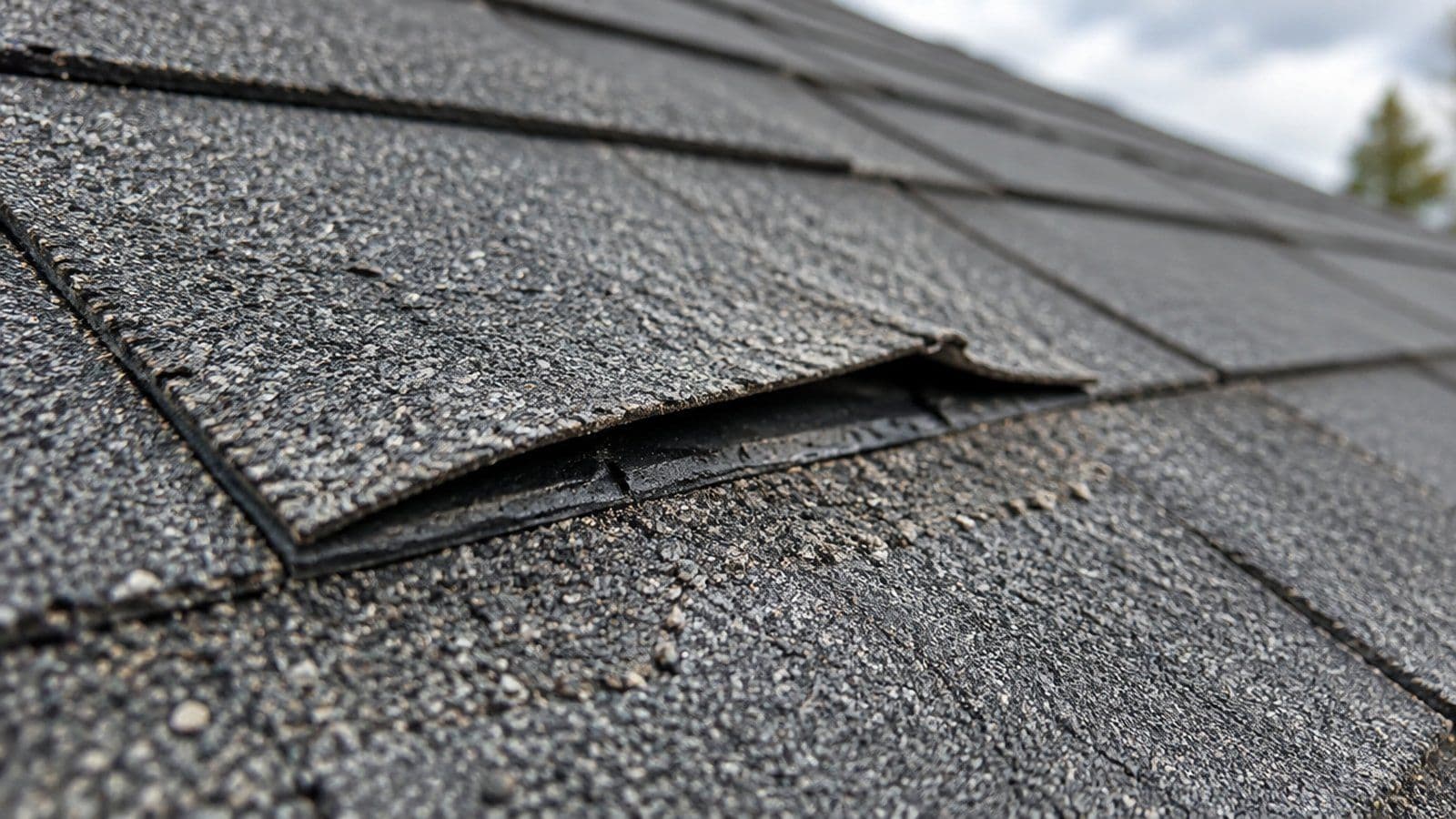
A shingle that gets lifted and folds back leaves a straight crease line across it, usually near the nails. When the wind stops, the shingle often drops back flat and looks fine from the ground. It is not fine. The shingle is weakened along that line, the seal under it is usually broken, and the next storm lifts it more easily. Creased shingles are the wind damage that gets missed the most.
Lifted or unsealed shingles
Sometimes the seal breaks without a crease. The shingle sits a little higher than the ones around it, and you may hear it flapping the next time the wind picks up. In sideways, wind-driven rain, water can get pushed right under it.
Torn shingles
When a lifted shingle keeps flapping, pieces tear away. You end up with jagged edges, exposed nail heads, and the shingle below sitting out in the weather with nothing over it.
Missing shingles
This is the one to deal with right away. When whole shingles blow off, all that is left is underlayment or bare decking. Underlayment is a backup layer, not a roof. Rain will find its way through it.
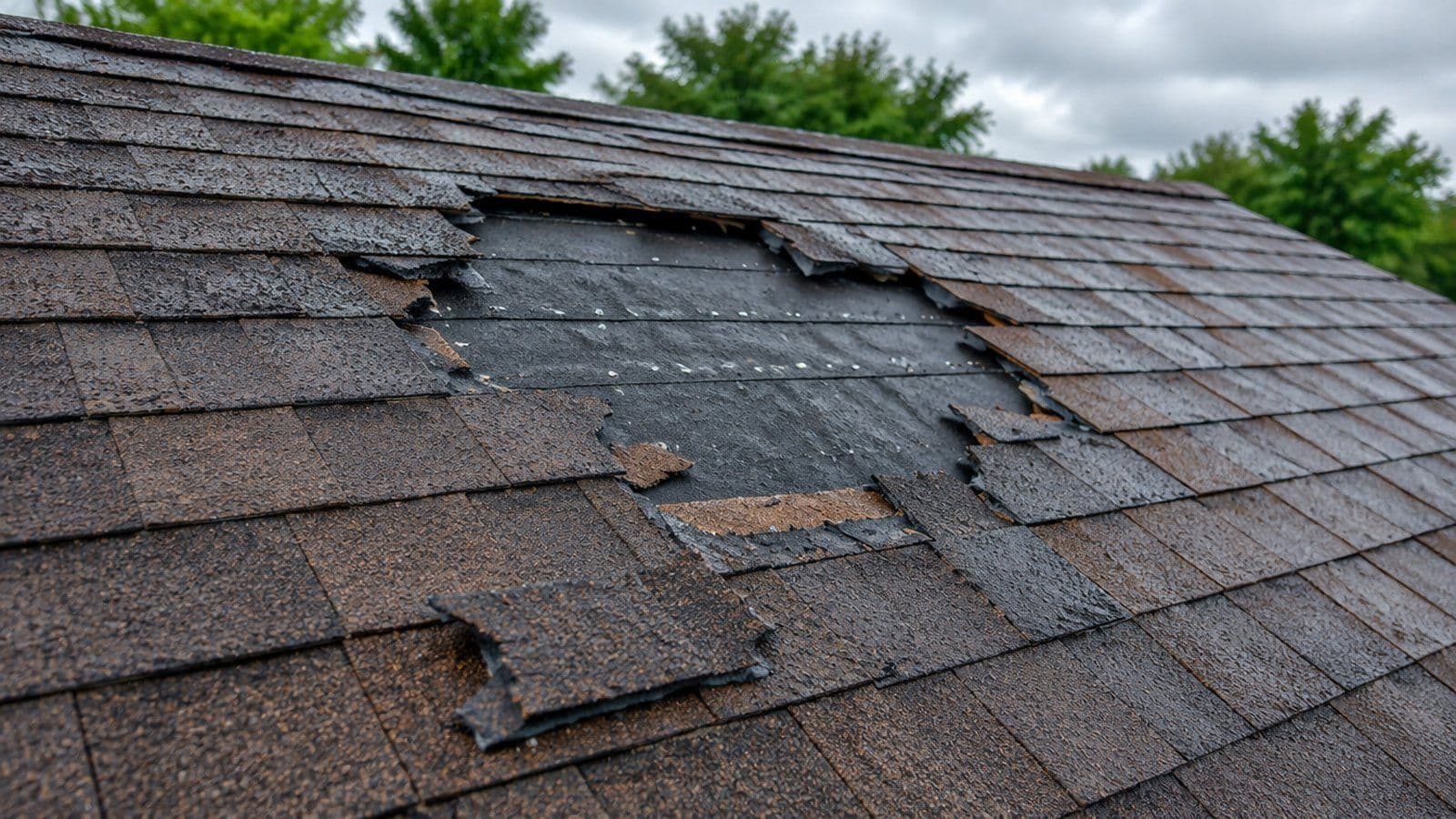
Wind hits some parts of the roof harder than others. Ridges, corners, the edges along the eaves and the rakes, and the slope facing the storm take the most. That is where to look first.
How to check your roof for wind damage from the ground
You can learn a lot without a ladder. After a windstorm:
- Walk the yard and the street. Look for pieces of shingle, ridge cap, flashing or vent covers.
- Look at the roof from every side, using binoculars or your phone's zoom. Focus on the ridges, corners and edges.
- Look for shingles that sit at a different angle, show a dark line or shadow, or are a different color than the shingles around them. A bright or dark patch can mean a shingle is gone.
- Check gutters for bends, and check the downspouts for shingle pieces.
- If you can get into the attic safely, look for daylight coming through and for wet spots on the underside of the decking.
- Watch your ceilings the next time it rains hard.
Stay off the roof itself. Shingles are slick when they are wet, a creased shingle can tear under your foot, and a fall off a two-story roof is not worth any repair.
Wind damage roof repair in Rowlett, TX: what to do next
If you see damage, or just suspect it, here is the order that keeps you protected.
- Take photos and video first. The Texas Department of Insurance says to photograph the damage and record video. Get the roof from the ground, the debris in the yard, and any stains inside, with the date.
- Cover any openings. TDI also says to cover holes and save your receipts, and notes that your policy may pay for temporary repairs. A tarp over missing shingles keeps a small problem from becoming a ceiling and insulation problem.
- Call your insurer promptly if the damage looks real. TDI's advice is to file as soon as you can after hail or strong winds damage your home. Deadlines for filing vary by policy, so check yours. This is not legal or insurance advice; your agent and your policy have the final word.
- Get a roofer to look at it up close. Creases and broken seals are hard to see from the ground, and they are exactly what an adjuster needs to see documented.
Repair or replace after wind damage?
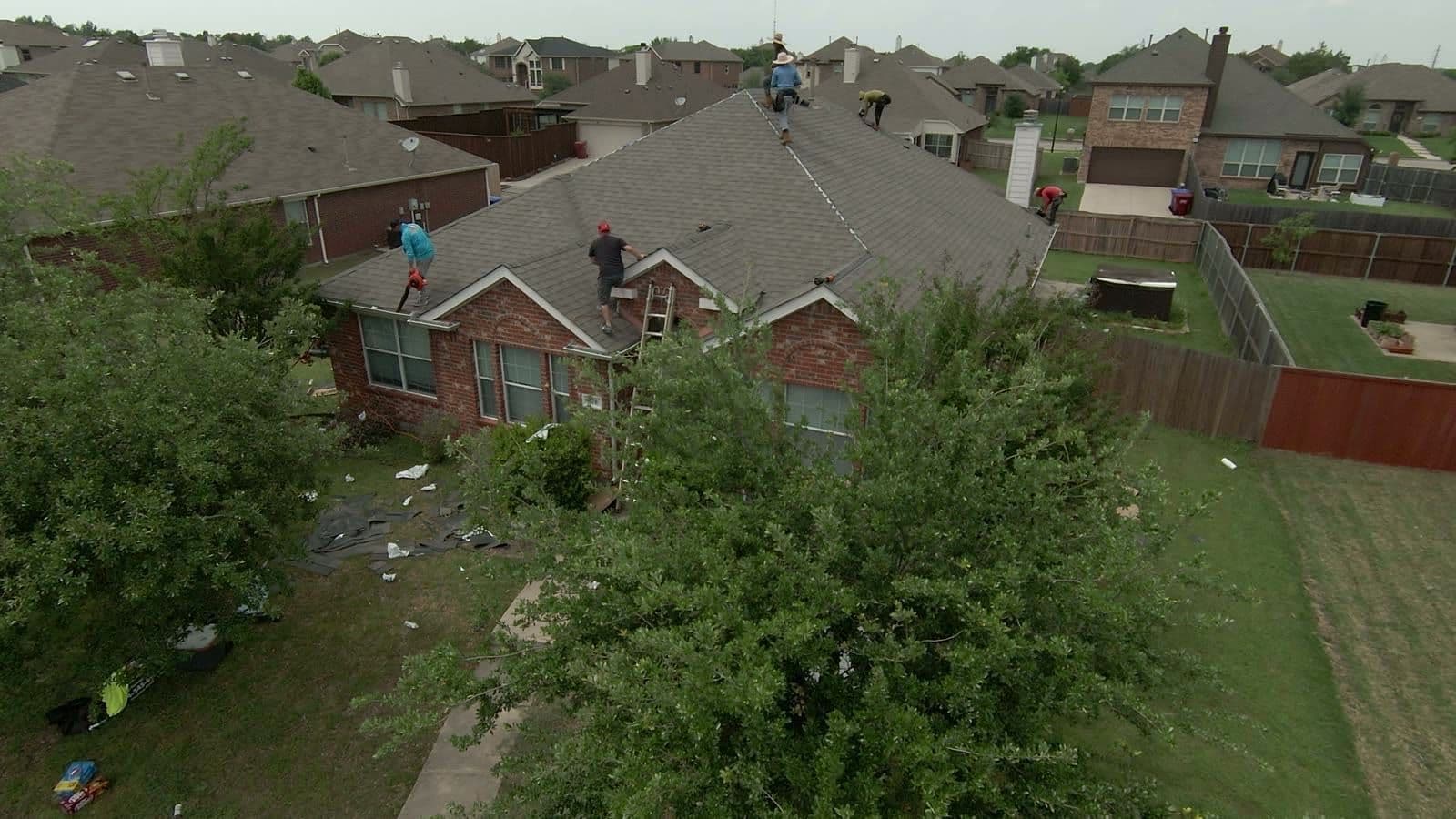
When it comes to wind damage roof repair in Rowlett, TX, most jobs are exactly that: a roof repair, not a new roof. If a handful of shingles are missing or creased in one area and the rest of the roof is in good shape, the damaged shingles can be replaced and the area resealed. Expect the new shingles to look a little different at first if your roof is older, because shingles fade with time.
Replacement starts to make more sense when:
- Creased or lifted shingles show up across several slopes, not just one corner.
- The shingles are so brittle that they crack when a roofer lifts them to make a repair.
- The roof is near the end of its life anyway. InterNACHI puts the life expectancy of 3-tab asphalt shingles at about 20 years and architectural shingles at about 30, and notes that hot climates shorten asphalt shingle life a lot.
- You have had to fix wind damage more than once in the last few years.
If that sounds like your roof, our roof replacement page walks through what comes next.
Get a free wind damage inspection from Duane
If the wind has been rattling your roof and you think it needs a repair, call Duane Huddleston at (214) 545-8133 or request a free inspection. He will check the ridges, edges and slopes for creased, lifted and missing shingles, show you photos of what he finds, and tell you straight whether it is a quick repair, an insurance claim or nothing to worry about. If it is storm damage, he can help you document it and meet with your adjuster. No cost and no obligation.
Total Pro Roofing serves Rowlett, Sachse, Garland, Rockwall, Royse City and the rest of DFW.
Have a question about your roof?
Call Duane at (214) 545-8133 or request a free inspection. No cost, no obligation.